How many times a week is martial arts training advisable?
For most beginners, two to three sessions per week form a sensible framework for making progress while still giving the body enough recovery. More important than a high frequency is consistency: those who train steadily over months learn more sustainably than someone who trains irregularly, in bursts. The right frequency also depends on age, level of experience, and personal capacity.
How often per week is martial arts training advisable
There is no fixed number that applies to everyone. As a general guide, a rhythm of two to three sessions per week has proven effective for adults who are just starting out. This frequency is enough to consolidate movements and keep progress noticeable, without overwhelming daily life. Those who train only once a week can certainly enjoy martial arts, but progress is usually slower, since a lot is lost again between sessions.
There is no universal upper limit. Four or more sessions per week can make sense if the body and schedule allow it and the training is varied. What matters is that the added frequency does not come at the expense of recovery.
What matters more than sheer frequency
- Quality over quantity: Attentively led lessons with clear technique achieve more than many superficially completed sessions.
- Consistency counts: Two fixed sessions per week over several months usually have a more positive effect than five sessions in a single week followed by weeks without practice.
- Individual circumstances: Age, physical condition, work demands, and existing movement experience influence how much training can reasonably be handled. When in doubt, it is worth talking to an experienced instructor.
- The practitioner’s goal: Someone primarily seeking movement and balance needs a different rhythm than someone specifically working toward an exam.
Recommendation by experience level
Beginners
In the first months, the focus is mainly on understanding the basics and building clean execution. Two sessions per week are a good start here. They give the body time to get used to the new movements and leave enough room to process what has been learned.
Advanced practitioners
With growing experience and improved conditioning, the frequency can increase to three or more sessions. Advanced students can usually handle a higher load, because their technique is more efficient and the body has adapted to the demands. Even then, recovery remains part of progress.
Children and adults differ
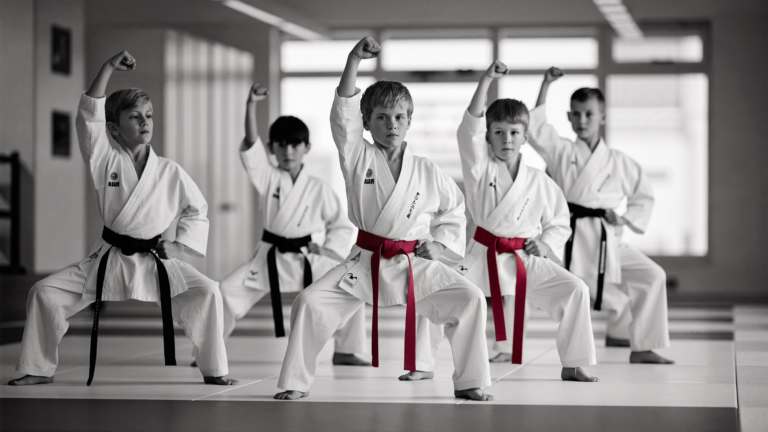
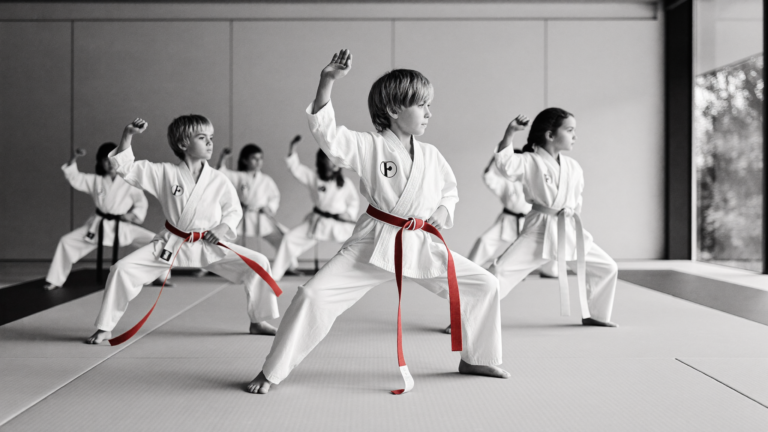
Children benefit from regularity but do not necessarily need many sessions per week. One to two fixed sessions are usually enough for them to keep enjoying the practice, gain confidence, and develop in an age-appropriate way. For adults with clear goals, the volume may be higher, as long as sleep, nutrition, and daily life allow for it.
Don’t underestimate recovery
Progress does not come from training alone, but also from the breaks in between. Anyone who trains continuously without adequate recovery risks fatigue, loss of concentration, and in unfavorable cases, overload. Signs of this include persistent tiredness, waning enjoyment, or movements that get worse instead of better. In such phases, less is often more.
Finding your own rhythm
Start with two sessions per week and stick to this rhythm consistently for a few weeks. Pay attention to how you feel before and after training and whether you are sufficiently recovered between sessions. If maintaining regularity feels easy and you still have energy left over, you can add a third session. If you notice that recovery or motivation is suffering, stay with the lower frequency for now. This honest look at your own body is more reliable than any general recommendation.
Conclusion
Two to three sessions per week are a good starting point for most people. More important than the exact number is that you practice regularly and with enjoyment, allow your body proper recovery, and adjust the frequency to your daily life and your goal. This way, martial arts remains sustainable in the long term, rather than becoming a short-term burden.